What Changed About Bread? A Biblical and Historical Look at Flour
Bread used to be simple. For most of human history, bread was a daily food — trusted, nourishing, and relied upon to sustain families through work, pregnancy, childhood, and old age. It wasn’t controversial. It wasn’t something people felt conflicted about eating. It was just food. Today, bread feels different. Many people avoid it altogether. Others eat it but feel tired, bloated, or unsatisfied afterward. Some wonder if bread itself is the problem, while others quietly miss the comfort of a warm loaf but aren’t sure it fits into a healthy life anymore. This post isn’t about telling anyone what they should eat. It’s about asking a simple question:
What changed about bread?
Bread Was Once Daily and Dependable
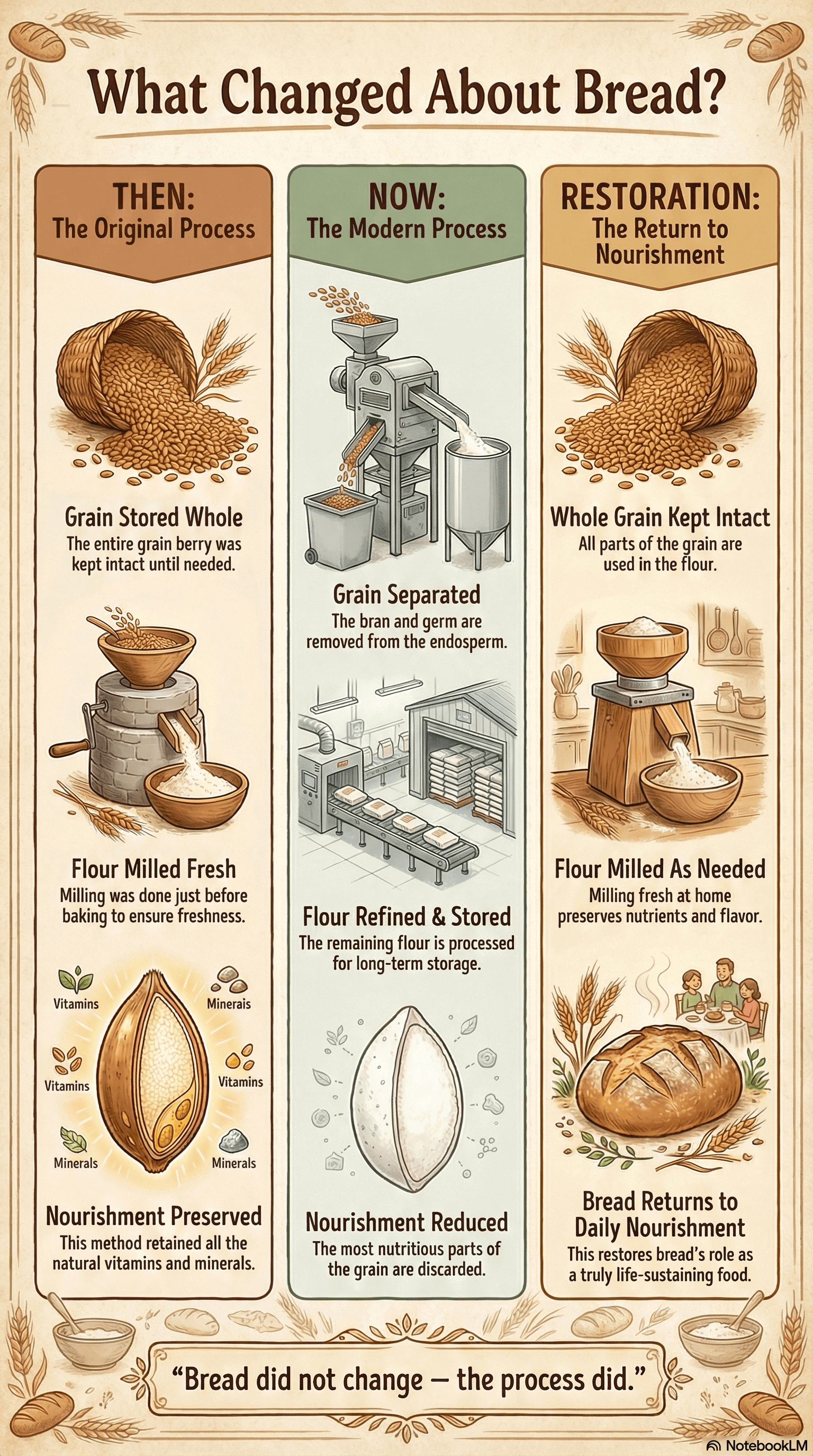
In Scripture, bread is mentioned again and again — not as a treat, but as a necessity. When Jesus taught His disciples to pray, He spoke of daily bread. That phrase carries meaning. It implies regular provision, freshness, and trust. Bread was never described as a highly processed product. It was tied to grain, fields, harvest, and daily work. Grain was stored whole. Flour was made as needed. Bread was baked often and shared at the table as a gift from God. For centuries, this rhythm worked. Bread nourished. It satisfied. It sustained.
Grain Didn’t Change — The Process Did
Wheat itself hasn’t changed much over time. What has changed is how it’s handled. Traditionally, grain was ground using stone mills or hand mills. The entire wheat kernel — bran, germ, and endosperm — was crushed together. Flour made this way contained fiber, vitamins, minerals, healthy fats, and natural balance. Because of those natural oils, flour didn’t last long. That was normal. Fresh flour meant fresh bread. In the late 1800s, industrial roller milling changed everything. Steel rollers separated the wheat kernel into parts. The bran and germ were removed, leaving mostly the starchy endosperm behind. This new white flour lasted much longer on store shelves and could be shipped long distances. From an industrial perspective, it solved many problems. From a nourishment perspective, something important was lost.
When Flour Became White
White flour became the standard because it was predictable, shelf-stable, and easy to work with on a large scale. But removing the bran and germ also removed much of the fiber, vitamins, minerals, and healthy fats that once helped the body digest and use bread well. Bread still looked like bread. It still filled the stomach. But over time, people began to notice that it no longer satisfied in the same way. Energy rose quickly and fell just as fast. Hunger returned sooner. Digestion felt heavier. Slowly, bread began to take the blame for problems it hadn’t originally caused. The grain itself wasn’t the issue. The process was.
A Quiet Return to Something Old
In recent years, more people have started asking different questions — not how can we avoid bread, but how can bread nourish again? This is where freshly milled flour enters the conversation. When grain is kept whole and milled as needed, nothing is stripped away. The flour reflects the grain exactly as it was created. Fiber remains. Natural fats remain. Vitamins and minerals remain in balance. Bread made this way feels different — not because it’s lighter, but because it’s more complete. Fresh milling isn’t about recreating the past for the sake of nostalgia. It’s about restoring a principle that still works:
- Grain stores well.
- Flour is meant to be fresh.
- Bread is meant to nourish.
Why This Matters
This isn’t about perfection, fear, or rules. It’s about understanding why bread feels different today — and recognizing that the solution may not be eliminating bread, but restoring it. In future posts, I’ll be sharing more about:
- Bread in Scripture
- The design of the wheat kernel
- How flour was traditionally made
- What the body lost through refinement
- Why fresh flour behaves differently
- And how ancient wisdom fits into modern kitchens
For now, it’s enough to start here.
Bread didn’t change.
The process did.
And sometimes, health begins not by removing foods — but by returning them to their original form.